

For decades, psychological science has sought to understand human experience not just in the lab, but as it truly unfolds in daily life. Today, a new wave of researchers is using mobile-first, in-the-moment assessment technology to capture behavior and emotion with unprecedented precision.
At ExpiWell, we celebrate these innovators who are shaping the future of research. They are moving beyond traditional methods, using technology to gather rich, contextual data that drives personalized and effective interventions.
We are thrilled to announce the recipients of the 2025 ExpiWell Dissertation Award! These four extraordinary scholars are using advanced momentary assessment and digital tools to tackle some of the most pressing questions in health, behavior, and social science.

Elizabeth Lampe is currently completing her psychology internship at Dartmouth-Hitchcock Medical Center and is in the final year of her PhD in Clinical Psychology at Drexel University. Her research integrates cutting-edge technology and theory to better understand and treat eating disorders, a focus she explores in depth through her ongoing research program and publications.
Elizabeth’s work leverages momentary assessment methods, advanced statistical modeling, and theoretical frameworks of disordered eating and health-behavior promotion to identify novel treatment targets. She is particularly interested in how adaptive exercise engagement and sleep dysregulation may serve as key intervention points for improving well-being in individuals with eating disorders.
Her dissertation study combines ecological momentary assessment (EMA) and passive sensor data within a supervised machine learning model to classify exercise episodes as either adaptive or maladaptive in real time. Findings from this project will directly inform innovative momentary interventions designed to promote healthier exercise behaviors in the context of disordered eating. More about this project and her broader research program can be found on her website.
Elizabeth’s research has been published in high-impact journals, including the International Journal of Eating Disorders and the European Eating Disorders Review, among others.
In addition to her doctoral work at Drexel, Elizabeth has held research appointments with the Behavioral Sleep Medicine Program at the University of Pennsylvania and the Center for Technology and Behavioral Health at Dartmouth College. Throughout her training, she has remained committed to integrating behavioral science, technology, and clinical insight to inform real-world, data-driven solutions for those affected by eating disorders.
Classifying Maladaptive and Adaptive Exercise in Eating Disorders Using Ecological Momentary Assessment and Passive Sensors

Kiran Kaur is a Clinical Psychology PhD candidate at the University of Utah and a predoctoral clinical intern at Massachusetts General Hospital/Harvard Medical School. Her research focuses on emotion regulation flexibility through a transdiagnostic lens, with a strong emphasis on using digital tools—including passive sensing and wearables, ecological momentary assessments (EMA), and just-in-time adaptive interventions—to personalize treatment, reduce barriers to care such as long waitlists or transportation challenges, and deliver precise, measurement-based care.
Her dissertation, supported by a National Research Service Award (F31) from the National Institute on Minority Health and Health Disparities, integrates focus groups and EMAs to examine how identity-related stressors and first-generation college student status influence the momentary effectiveness of emotion regulation strategies. Building on this work, Kiran has published theoretical, empirical, and mixed-methods papers on emotion regulation flexibility and is currently developing digital tools to translate these insights into scalable, real-world interventions.
Kiran’s clinical training complements her research by grounding her work in evidence-based care for underserved populations. At Massachusetts General Hospital/Harvard Medical School, she is deepening her expertise in cognitive-behavioral therapy (CBT) while pursuing a translational research agenda at the intersection of equity, technology, and mental health.
Across her career, Kiran aims to bridge clinical science and digital innovation to reduce disparities in mental health care—ensuring that interventions are not only effective in the lab but also accessible, inclusive, and impactful in the real world.
Ecological Momentary Assessment of Mechanisms Linking Racial Discrimination and Substance Use in Black College Students
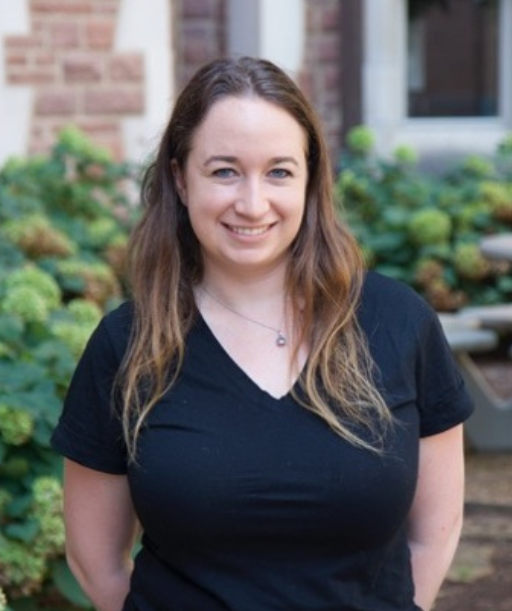
Alison Tuck is a PhD candidate in Clinical Psychology at Washington University in St. Louis, where she studies how our digital behaviors shape our emotional lives. Her research explores the complex ways that social media use intersects with emotion and mental health—from adolescence through adulthood.
As a clinical psychology trainee, Alison focuses on questions with real-world impact: for whom might social media use be risky, such as individuals experiencing depression, and how can people use these platforms in ways that truly support emotional well-being?
Her work takes a multimethod approach, combining experimental research, physiological assessment, and ecological momentary assessment (EMA) to understand how specific online behaviors influence both subjective feelings and nervous system responses in daily life.
Alison’s innovative research has been supported by a pre-doctoral fellowship from the National Institutes of Health (F31) and recognized by organizations such as the Elise Herzog Mental Health Research Fund and the National Institute of Social Sciences. She’s also passionate about sharing her findings beyond the lab—through community outreach and media engagement—to help translate science into practical insights.
Ultimately, Alison aims for her work to inform treatments and recommendations that promote emotionally healthy social media habits, empowering people to use digital spaces to enhance, rather than hinder, their mental health.
Social Media Use and Healthy Adolescent Development: A Multi-Method Investigation

Shiva Pauer is a postdoctoral researcher in social psychology at Helmut Schmidt University Hamburg, Germany, where he studies one of the most fundamental aspects of human life: uncertainty. His work explores how people make decisions and form evaluations when the world around them feels unpredictable — and how these psychological processes shape our responses to broader societal challenges.
Shiva’s research sits at the intersection of decision-making, emotion, and social behavior, combining rigorous empirical methods with an interest in the meta-scientific foundations of psychological research itself. In other words, he doesn’t just study how people think — he also reflects critically on how psychological science thinks about people.
He earned his PhD in 2024 from the University of Amsterdam, supported by a prestigious scholarship from the German Academic Scholarship Foundation (Studienstiftung). During his doctoral work, Shiva developed a passion for understanding the real-time dynamics of conflicted decision-making — those moments when our minds pull us in different directions and we wrestle with competing motivations.
Uncertainty in Flux: The Temporal Dynamics of Attitudinal Ambivalence and Risk Perception
To capture these subtle psychological processes as they unfold in daily life, Shiva employs a multi-method approach that includes experience sampling, multilevel and nonlinear modeling, as well as experimental and interventional designs. In a recent study, he combined event- and time-contingent sampling with a process-tracing approach to observe how people navigate difficult choices in real-world contexts — moment by moment.
Through his research, Shiva aims to shed light on how uncertainty influences not only individual behavior but also collective responses to social and political challenges — from decision paralysis to polarization. Ultimately, his work seeks to better understand how humans can remain flexible, reflective, and resilient in an ever-changing world.
ExpiWell congratulates Elizabeth Lampe, Kiran Kaur, Alion Tuck and Shiva Pauer on conducting research that contributes to innovative positive changes in their respective fields. It is inspiring to see rising EMA/ESM researchers making significant contributions to our community!
Aside from these bright researchers, ExpiWell would also like to extend gratitude to other EMA/ESM researchers who are continuously using their research work to understand the world around us. Let’s keep pursuing our passion for EMA/ESM research so we can strive for a better future.



.png)
